 OBEY RP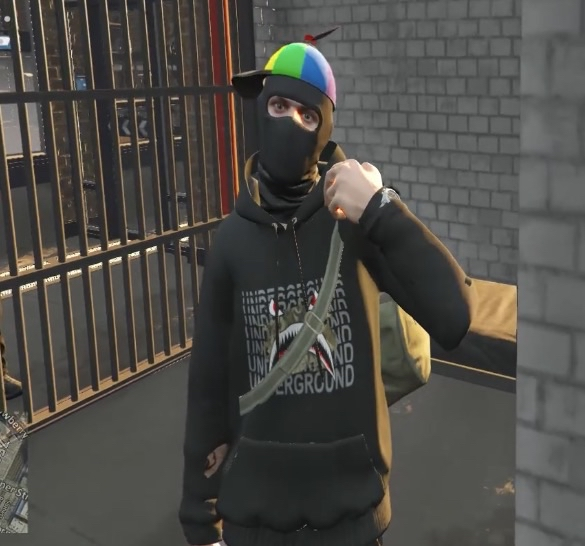
Sol learned the two rules early. Keep quiet. Don't trust promises. He was five years old, and the back blocks of Los Santos had a way of making sure the lessons stuck.
The neighbourhood
His mother worked nights and slept through the day. Father was a word nobody used in the apartment. The corridor outside their door was where Sol learned the rhythm of the street — who shouted, who listened, who carried, who got carried away. He learned to read a hallway like a book before he could read a book.
He was hungry most days. Not in the dramatic way. Just the steady background hum of not quite enough, which he took for normal because he didn't know there was anything else.
The sandwich
He was eight when a street vendor caught him slipping a sandwich off the corner of the counter.
The vendor was an older man who'd seen the trick a hundred times. He didn't shout. He didn't call anyone. He just looked at Sol for a long moment, then reached under the counter and pulled out a battered rainbow propeller cap — the kind a tourist's kid might wear once and leave behind.
"Wear this," he said.
Sol stared at him.
"If the world already thinks you're a clown," the vendor said, "use it. Nobody watches the clown. Nobody remembers the clown. The clown walks out with the sandwich."
He pushed the sandwich across the counter too, on the house. Then he went back to grilling onions like nothing had happened.
The uniform
Sol wore the cap home. He wore it to school the next day. He wore it when he went back to the same corner a week later to thank the vendor, who pretended not to know him.
The cap did what the old man had said it would do. Adults dismissed him. Older kids laughed at him. Crews who would have eyed up a quiet boy in plain clothes barely registered a kid in a propeller hat. He moved through the back blocks like a piece of weather.
He started layering the rest of it on himself — hoodie up under the cap, mask over the lower half of his face once that became normal in the neighbourhood. People saw colour and brim and a hood and stopped looking for a person underneath.
Courier work
By thirteen he was running packages.
Nothing he asked questions about. Burner phones in sealed envelopes. ID cards that didn't have his name on them. Small bricks of something he was told not to open and didn't. The crews paid him in cash and in the only currency that mattered to him by then — they let him keep moving, and they didn't ask where he slept.
He was good at it because he was already invisible. A boy in a rainbow cap on a bicycle is not a courier. A boy in a rainbow cap on a bicycle is a boy in a rainbow cap on a bicycle. The cap did the work the vendor had promised it would.
Now
The hoodie still goes up. The mask still goes on. The cap is older than it should be — frayed at the brim, one propeller blade chipped — and he refuses to replace it.
He doesn't talk much. He listens, he counts, he remembers where everyone stood the last time something went wrong. When he speaks, the people who've worked with him for years notice, and the people who haven't dismiss him as the kid in the silly hat.
That's the point.
Long-standing player biographies are written by staff to thank the people
who shape Obey. Suggest the next one in #wiki-suggestions on Discord.